
Connect in Nature
Be inspired
Warm up to Winter
DC Newsletter 2024

Discover what makes Washington, DC a sustainable destination for your next meeting, convention or event.
The nation’s capital boasts a range of practices and policies that make environmental accountability a priority for residents and visitors alike, allowing them to adopt sustainable measures more readily than other cities. With closeness to a diverse range of national parks, including the National Mall, residents are often found walking to their next destination. Explore the top five ways in which Washington, DC is a top sustainable city for your next event.
01 Transparency and Accountability
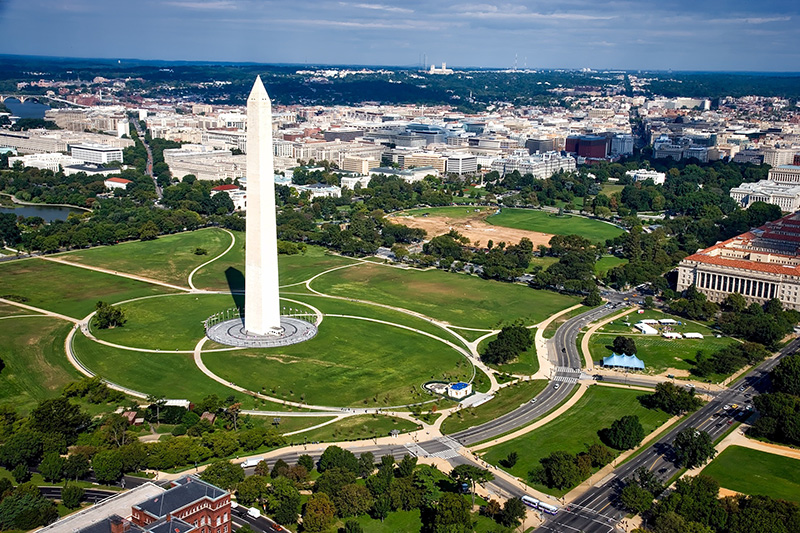
While those on the Hill have been known to struggle at times with the basic principles, DC knows that the journey of becoming a truly sustainable destination is too important to forego checks and balances. That is why DC has included itself among the pioneering group of cities and regions participating in the Global Destination Sustainability-Index Assessment since 2018. The all-encompassing evaluation serves as a benchmarking tool for destinations looking to not only show off their hard work regarding social and environmental sustainability, but to share best practices with other destinations around the world and ultimately improve their own performance.
In 2021, Washington, DC was the only U.S. destination and one of only 73 in the world to submit an assessment. Initiatives by our city’s leadership, like Sustainable DC, went far in proving DC’s commitment to stopping the progress of and adapting to the effects of climate change. Destination DC’s own relationship with its nearly 1,000 members also boosted its score in destination management. Perhaps most important to the assessment were the various ways DC is prepared to welcome meeting attendees and leisure travelers to the city and help make sustainable options the easy choice.

Though the city did not rank among the top of this year’s participating destinations, it is the willingness to embrace the path to a more sustainable future that we celebrate. Whether your group requires multiple venues and hotels or fits happily in-house, planners and attendees can relax knowing that sustainability is considered at every step taken along DC’s historic and vibrant streets – always with plans to improve by your next visit!
02 Walkability and Sustainable Transportation
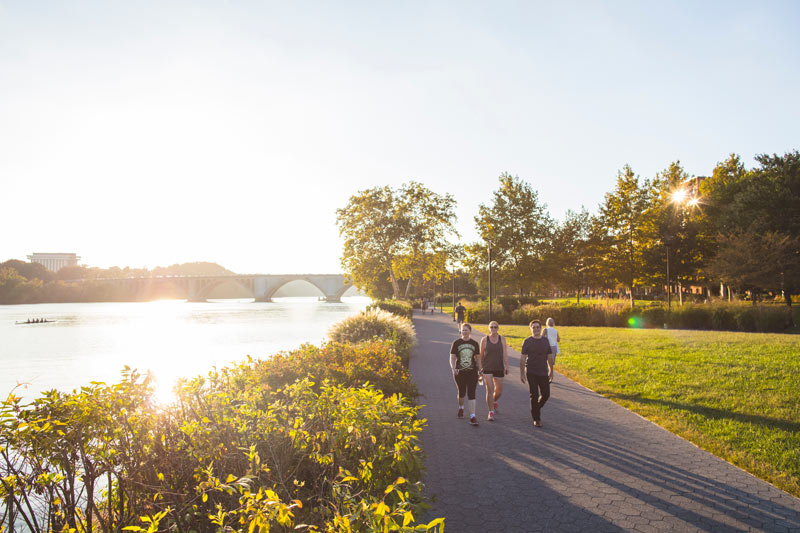
With 40-plus hotels within walking distance of the Walter E. Washington Convention Center, the ease of commuting within the nation’s capital is a key benefit for business travelers. DC sets the scene for sustainable commuting. In fact, 58 percent of commuter trips in DC are by bike, walking or public transit and the DC Government is 100 percent powered by renewable energy, according to USGBC.
AGU hosted 28,000 attendees for its 2018 fall meeting in Washington, DC without the use of a shuttle:
“We selected Washington, DC in large part because the city is so walkable and has excellent public transportation,” said Lauren Parr, vice president of meetings, AGU. “AGU never shuttles for large meetings as it’s a carbon and financial expenditure that we don’t wish to incur, and we had excellent feedback from our attendees on what a great walking city DC is. DC was a great choice for AGU and it’s a great choice for any planner looking to leverage the local transportation options and eliminate shuttles.”
Many meeting planners continue to look at Washington, DC as a city that doesn’t need shuttles, and is walkable and convenient for attendees.
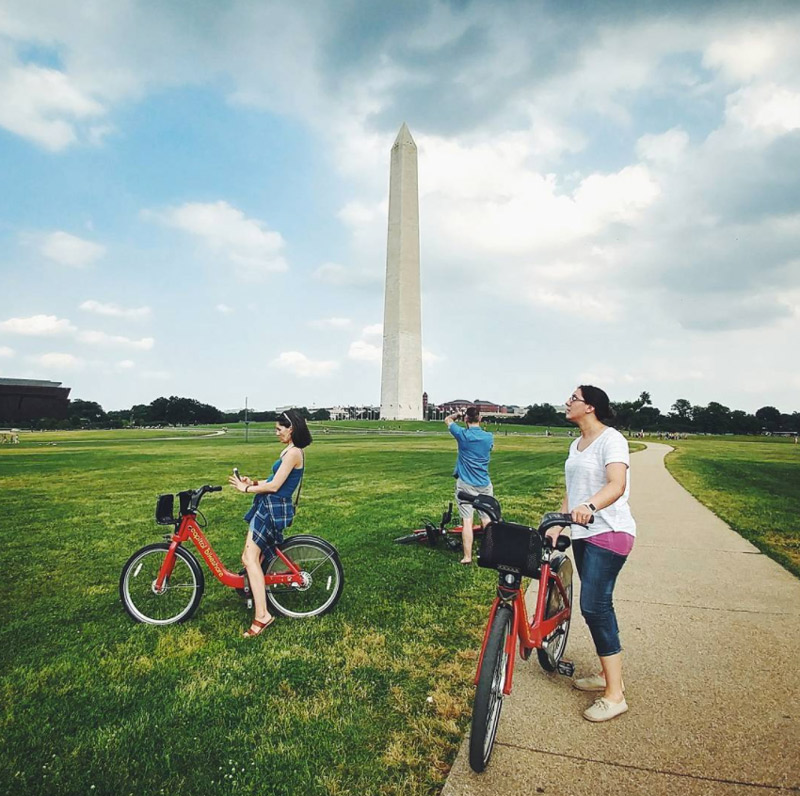
Washington, DC was the first city in North America to launch a bikeshare system, which now has more than 4,000 bikes and 500 stations. Capital Bikeshare is one of the most popular ways to commute throughout the city and it’s easy to obtain and return a bike at one of hundreds of stations.
As an alternative to traditional diesel fuel, buses that run on compressed natural gas (CNG) produce roughly 45 percent fewer hydrocarbons, making them an attractive option for green meetings and events. In Washington, DC, more than 1,400 buses operated by the Washington Metropolitan Area Transit Authority (WMATA) run on alternative fuel that is less harmful to the environment, including CNG, advanced technology diesel fuel, and ultra-low sulfur diesel fuel. In addition, the DC Circulator costs just $1 for all riders along six routes designed for easy-on, easy-off access at points of interest throughout the District. The Circulator services Adams Morgan, Dupont Circle, Georgetown, Woodley Park, U Street and Capitol Hill.
Washington, DC’s environmental friendliness has a lot to do with its green space, as home to the National Park Service that operates various hiking trails, Memorial Parks, National Mall, Rock Creek Park, Chesapeake and Ohio Canal National Historical Park and more.
03 Sustainable Hotels, Responsible Restaurants and Eco-Friendly Catering

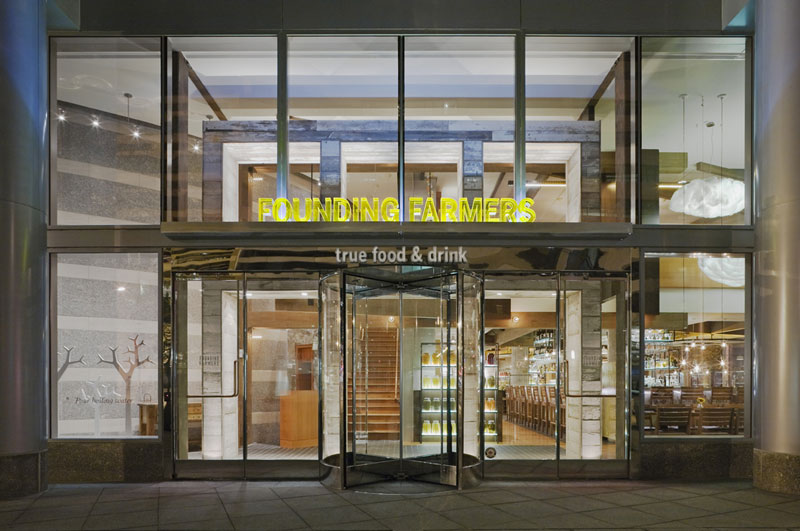
The term “farm-to-table” has moved beyond a trend to a standard at local restaurants. Many DC restaurants have expanded their sustainability awareness with biodynamic agriculture, local farming and more that goes far beyond the kitchen. All of the delicious farm-to-table restaurants in Farmers Restaurant Group – Founding Farmers, Farmers Fishers Bakers, and Farmers & Distillers – are LEED-certified and have in-house recycling and composting programs that keep 90 percent of waste out of landfills. Bresca has joined ZeroFoodprint in an effort to fight climate change by going carbon neutral. Right Proper Brewing Company is run completely on solar power, producing almost all the company’s consumed electricity. The company also uses LED lights in the tasting rooms and production facilities and gives spent grain away for free to local farmers.
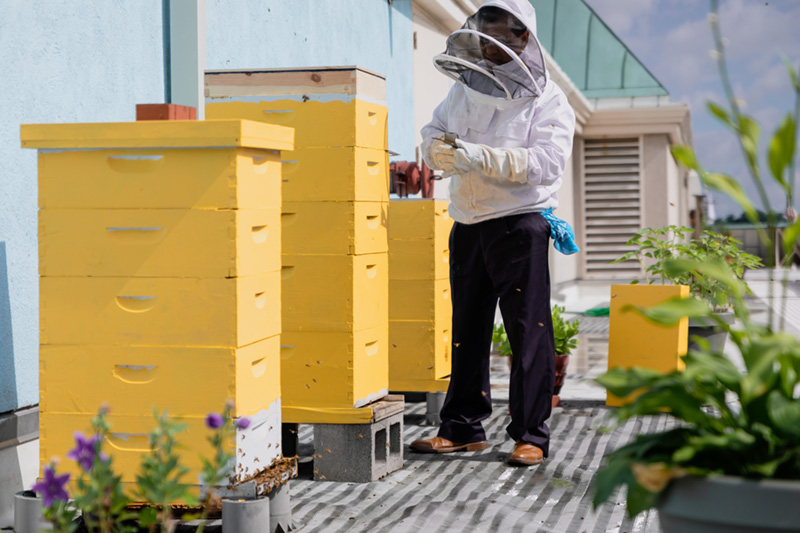
Several of DC’s hotels have embraced sustainability and continue to adapt as new challenges and opportunities appear. The Marriott Marquis Washington DC, a 15-story property with 105,000 square feet of meeting space adjacent to the Walter E. Washington Convention Center is one of the largest LEED Silver-certified hotels in the U.S. The Fairmont Washington DC Georgetownis another great example, home to over 100,000 honeybees, which enhance the hotel’s culinary program providing over 150 pounds of honey annually. The honey harvested from the rooftop beehives is used in soups, salad dressings, pastries, ice cream, cocktails and in the hotel’s signature honey walnut bread. Certo!, located in the Royal Sonesta Washington DC Dupont Circle, is also committed to being a leader in sustainability with a rooftop garden that yields produce for garden composting and the hotel’s work with DC Public Schools on cooking programs using herbs and produce from Certo’s garden surplus. Guests at Motto by Hilton Washington DC City Center will find refillable water stations throughout the hotel, a vegetated roof area for hosting events and smart LED lighting and air conditioning with infrared sensors that auto shut when you are not in the room.

For food service needs during meetings, many catering companies in DC are socially-sensitive businesses with responsible practices that support the local community, incorporate green recycling programs and produce eco-friendly offerings. Windows Catering Company focuses on green initiatives such as waste reduction, using pre-consumer waste composting as a standard practice. Occasions Caterers is one of the top catering companies for events in the nation’s capital and works closely with The Green Restaurant Association, a national environmental organization that assists the company in implementing eco-friendly on-site practices. In 2008, Occasions was recognized as the nation’s first Certified Green Restaurant Caterer because of the company’s green initiatives, including a water filtration and bottling system, biodegradable service ware, local and sustainable ingredients and a water conservation system. Ridgewells Catering, RSVP Catering, Design Cuisine and Main Event Caterers are among other companies that strive to reduce their impact on the environment and provide high quality sustainable food and beverage service for every DC meeting and convention.
04 Social Stewardship

Washington, DC is a city that celebrates its history of protests and progress and its heritage of multicultural residents and visitors. From its leadership to its citizenry, DC is dedicated to ensuring travel to the city is at the benefit of locals and meeting attendees alike.
Elliott Ferguson, President and CEO of Destination DC, often leads conversations on the importance of prioritizing racial equity and social justice in the city. He also lends his voice to a broader audience, and currently chairs the Executive Committee of the newly launched Tourism Diversity Matters, a travel industry organization dedicated to presenting a united front on matters of Diversity, Equity and Inclusion. With Ferguson’s support, the Destination DC team has created the DEI District and its companion guide to meetings as a resource to planners and attendees preparing for their conference in the city.

With often high numbers of attendees, meetings in particular have the potential to make a huge impact on their host destinations. Destination DC’s Connected Community initiative allows groups to plan a social impact project designed to leave a lasting legacy in DC, tailored to align with the mission of the group. In partnership with the city’s Office of Volunteerism, Serve DC, planners can design a program that goes beyond the impact of typical corporate social responsibility projects and realize the organization’s full potential to positively impact meeting attendees and the city of DC.
05 Designing Out Waste

Washington, DC was the first of more than 100 cities globally to achieve a Platinum Rating in the LEED (Leadership in Energy and Environmental Design) for Cities Certification in 2017, in part due to the city having the most LEED-certified buildings in the U.S., according to the U.S. Green Building Council (USGBC). LEED is the most widely used green building rating system in the world. LEED for Cities was launched in 2016 and enables cities to measure and communicate performance, focusing on outcomes from ongoing sustainability efforts across an array of metrics, including energy, water, waste, transportation, and human experience. The District boasts a plethora of LEED certified hotels and venues in the nation’s capital and sustainable spaces in each quadrant.
The American Geophysical Union (AGU)’s 62,000-square-foot headquartersis the first-ever net zero energy renovation of an existing building in DC. “Net zero energy” means the total amount of energy utilized by the facility is equal to or less than the amount of energy generated onsite through the use of technologies and renewable power generation. In turn, this reduces waste, water and energy consumption to almost zero and helps the city greatly reduce its carbon footprint. Some of the strategies that the AGU building put in place to fulfill this goal of being a net zero energy building include 700 rooftop solar panels, a municipal sewer heat exchange system and a water reclamation cistern, which collects rainwater from the roof.

While we design strategies to reduce waste in new developments, it is just as important to mitigate the impact of the city’s current waste. Washington, DC’s LEED Platinum certification recognizes the city’s leadership in creating a sustainable and resilient environment, reducing greenhouse gas emissions, supporting clean energy innovation and focusing on livability in all eight wards. Over the past two and a half years, Mayor Bowser’s administration has released Climate Ready DC, which was entered into one of the largest municipal onsite solar projects in the U.S.; launched Sustainable DC 2.0, and, more recently, signed the Clean Energy DC Act in December 2018, the nation’s first 100 percent renewable energy bill and the most aggressive, fastest-acting climate change legislation in the country.
Washington, DC has taken many steps to reducing consumption, reusing materials and recycling eligible waste throughout the city. In January 2010, the District encouraged residents to use reusable bags by implementing a five-cent charge for each disposable paper or plastic carryout bag purchased at a business selling food or alcohol. The majority of the proceeds from the carryout bag fee go into the new Anacostia River Clean Up and Protection Fund.
In January 2016, the city banned the use of food service products made of expanded polystyrene, commonly known as foam. Mayor Muriel Bowser supports “Our Last Straw,” a coalition of businesses, environmental organizations, and residents seeking to eliminate the use of single-use plastic straws. In January 2019, the District implemented fines for single-use plastic straws and stirrers, which continues to help the city move towards being a leader in sustainability. The Department of Energy & Environment (DOEE)’s RiverSmart programs help to reduce stormwater runoff that harms the District’s waterways and the Chesapeake Bay, while also providing financial incentives for District property owners who install green infrastructure such as rain barrels, green roofs, rain gardens and more.